Clean Protein Powder in NZ and Australia: I Asked the Brands for Their Test Results
Protein powder is one of those things I get asked about constantly, and I understand why. It's such an easy way to hit your protein target, support recovery, keep hunger in check between meals, and fill the gaps on the days when sitting down to a proper meal just isn't happening.
But walk down the supplement aisle and read a few labels properly, and you'll find most of them read more like a chemistry experiment than a food. Heavy metals, artificial sweeteners, synthetic additives and fillers are far more common than most people realise.
The good news is there are some great options out there, and once you know what to look for, choosing one gets a lot simpler. I've done the digging so you don't have to. We will look at what's actually worth worrying about, what isn't, and which products I think are worth buying.
What Is Protein Powder Actually Good For?
Whole foods like meat, eggs, legumes and dairy will always be the foundation of a good diet. Nothing replaces that. But there are times when protein powders are useful to have on hand.
If you're doing regular resistance training, your protein needs are higher than you can comfortably eat in a day without a lot of volume. Older adults face a natural decline in muscle mass and benefit from higher intakes too. And if you're recovering from illness or surgery, getting enough protein in without facing a full meal can make a real difference to how you feel. It is also great to use postpartum to keep your protein levels up to support breastfeeding and healing.
Then there's the practical side. A scoop in a smoothie or stirred through your oats takes thirty seconds. Perfect for busy weekday mornings when you do not have time to cook a full breakfast.
So, the issue isn't protein powder as a category. The issue is what goes into most of them.
What's Actually in Most Protein Powders?
Heavy metals
This is the big one. It's why I ended up emailing brands one by one and asking for their lab results.
In 2018, the Clean Label Project tested 134 protein powders and found nearly all contained at least one measurable heavy metal. They repeated it in 2025 with 160 products from 70 brands, and the picture hadn't improved: just under half exceeded a state or federal safety threshold, which is the benchmark the study used because neither New Zealand nor Australia sets a limit for protein powder at all.
The useful part is where the contamination concentrates. Plant-based powders averaged three times the lead and five times the cadmium of whey-based ones, and a Consumer Reports investigation in October 2025 put the gap wider still, at around nine times the lead of dairy proteins and roughly twice that of beef.
That pattern mostly holds locally, but not always. Two of the three New Zealand pea proteins I could obtain results for came in at 0.04 mg/kg lead, from different suppliers and different labs. The third came in at around a quarter of that. Peas do draw metals up from the soil they're grown in, in a way cows don't pass on, but that third result tells you sourcing matters as much as the raw material does.
Dairy and collagen were consistently the lowest in what I looked at. But plant-based isn't automatically the higher-exposure choice, it just varies more, which is exactly why the numbers matter. Fava bean tested four times lower than pea, for a reason worth knowing: fava beans hold heavy metals in their roots and shoots rather than in the seed you actually eat.
Chocolate is worth watching too. In the 2025 testing, chocolate powders averaged four times the lead of vanilla, and I saw the same thing in the results I gathered here. It's the cocoa. Cacao plants take up cadmium from the soil and it carries through into the powder. Nothing that breaches any standard, but if you're drinking the same shake every morning, unflavoured or vanilla is often a better pick.
This matters because heavy metals accumulate. Lead deposits in bone and cadmium in the kidneys, where it has a half-life measured in decades, and chronic low-level exposure has been linked to neurological, hormonal and kidney damage. In something you're having every single day, that adds up and is worth being considerate about.
There's no legal limit here
There is no maximum level for heavy metals in protein powder under the Australia New Zealand Food Standards Code. When the Code was revised, a lot of the old metal contaminant limits were removed because they couldn't be justified on public health grounds, and protein powder was never assigned one. What we have instead are Generally Expected Levels for certain foods, and the tolerable intake guidance published by the World Health Organization and Food and Agriculture Organization of the United Nations (FAO).
Nobody is legally required to check. Which is exactly why testing matters. Look for brands that test anyway and show you the results. If they aren't prepared to share them, I'd look elsewhere.
-1788824546041.png)
Artificial sweeteners
Sucralose, aspartame and acesulfame potassium turn up in an enormous number of commercial protein powders.
Sucralose is the one I'd personally avoid. A 2023 study in the Journal of Toxicology and Environmental Health found that sucralose-6-acetate, an impurity present in commercial sucralose, which also appears to form in the gut during digestion, was genotoxic in laboratory testing, meaning it damaged DNA in cells it was exposed to. That research was done in cells rather than in people, so it's not conclusive. But when the alternative is a powder sweetened with monk fruit, I don't see the trade-off as worth making for something you're drinking daily.
-1788824656914.png)
Artificial flavours and colours
Synthetic flavourings and colour additives do nothing for you nutritionally. Some synthetic dyes have been associated with hyperactivity in children and allergic reactions. If a brand is prioritising palatability over ingredient quality here, that tells you something about the rest of the tub.
Fillers and thickeners
Maltodextrin, corn syrup solids and vegetable oils (usually sunflower or canola) get added to bulk out a product or improve texture. Maltodextrin has a glycaemic index higher than table sugar and can spike blood glucose significantly, which feels like a strange thing to find in something sold as a health supplement. Many of these ingredients are also derived from GMO crops.
Carrageenan
Carrageenan is a thickener made from seaweed. You'll find it in protein powders and plant milks.
A 2001 review by Tobacman, published in Environmental Health Perspectives, found it damaged the gut in animal studies. The worst effects came from a broken-down version called poligeenan, which isn't allowed in food. But the food-grade version has been linked to gut problems too, in animal studies and in one small trial where people with ulcerative colitis came out of remission faster while taking it.
It's approved as a food additive in the EU. Although when EFSA reviewed it in 2018, they said the evidence wasn't strong enough to confirm it was safe, and asked for tighter limits.
If you have a sensitive gut or an inflammatory gut condition, it's worth knowing it's in there.
Oxidised fats
Some powders contain added fats. If those fats come from low-quality sources, or the powder has been stored badly, oxidised lipids can be present. Consuming oxidised fats has been linked to inflammation and cardiovascular damage. To reduce the risk, choose products that name their fat source rather than listing generic "vegetable oil", and store the tub sealed in a cool, dark place.
Vegan or Animal-Based: Which Protein Powder Is Cleaner?
People often want to choose plant-based powders for ethical and environmental reasons. However, it's worth knowing that plants absorb metals from the soil they grow in.
Pea and brown rice protein, the two most common bases for vegan powders, usually test higher for cadmium, lead and arsenic than anything dairy-derived. Partly it's the soil those crops are grown in. And partly it's that concentrating the protein concentrates whatever else was in there too.
But usually isn't always. The best plant results I saw sat right alongside the dairy ones. What surprised me was the gap between plant proteins themselves, which was wider than the gap between plant and dairy. That's the bit worth taking away. It's about where the crop was grown and how carefully the brand sources it, not the crop itself.
This doesn't make vegan protein powder bad. It means sourcing and testing matter more with plant-based products. Look for a brand that regularly tests and can show you their heavy metal results.
Whey protein tends to test lower for heavy metals. New Zealand and Australian products both have a good international reputation, because farming in both countries is largely pasture-based rather than the intensive indoor systems common overseas. Grass-fed is close to the norm in New Zealand, and common across much of Australia too, though it varies more by region and farming system there.
Which is exactly why the label matters. If you're choosing Australian products, look for ones that state 100% Australian grass-fed. That matters, because residues in the source milk can carry through into concentrate and isolate.
Bone broth protein gives you protein alongside naturally occurring collagen peptides, gelatine and trace minerals. Sourcing matters here too as bones are where heavy metals can accumulate in animals, so grass-fed and pasture-raised is what you want to look for.
Collagen powder has become popular for skin and joint support alongside its protein content. It isn't a complete protein on its own, because it lacks tryptophan, but alongside a varied diet it's a high-quality and generally very clean option.
How Much Protein Is Actually in Your Protein Powder?
This is the check almost nobody does, and it's the one that tells you the most about what you're buying.
Divide the protein grams by the scoop size. A straight protein powder should land around 70 to 80 percent protein by weight. If a tub gives you 20g of protein in a 50g scoop, that's 40 percent, and the real question becomes: what's the other 30g doing?
Sometimes the answer is nothing good. Maltodextrin, corn syrup solids, gums and thickeners are there to bulk out the tub and improve texture, and you're paying protein prices for them.
Sometimes the answer is fine. Blends that include other active ingredients, like creatine or a wholefood such as chia, will sit lower on the percentage without anything being wrong. The number itself isn't the verdict. The ingredient list will give you the full picture if it contains unwanted fillers.
It is handy to use the percentage as an indicator and if it is low then check the ingredient list. If everything in there is doing a job, it's a blend rather than a filler problem.
Protein type | Typical protein content | Complete protein? | Heavy metal risk | Best for |
|---|---|---|---|---|
Whey protein concentrate | 70–80% | Yes | Low | Everyday use, best value, keeps more of the natural dairy nutrients |
Whey protein isolate | 85–90% | Yes | Low | Higher protein per scoop, lower lactose |
Pea protein isolate | 80–85% | Nearly (low methionine) | Higher: testing essential | Dairy-free and vegan |
Brown rice protein | 70–80% | No (low lysine) | Higher: testing essential | Blending with pea to complete the amino profile |
Bone broth protein | 70–90% | No (collagen-based) | Low with good sourcing | Gut, joint and skin support alongside protein |
Collagen peptides | 85–95% | No (no tryptophan) | Low with good sourcing | Skin, hair, nails and joints: as a complement, not your only protein |
How to Choose a Cleaner Protein Powder
You don't need to spend an hour reading every label. A few filters rule out most of the problem products quickly.
-1788824757604.png)
Look for a short ingredient list. A good protein powder doesn't need ten lines of additives. The protein itself, a natural sweetener like monk fruit if it's sweetened at all, maybe a natural flavour. That's it.
Check for heavy metal testing. Since nobody is legally required to test protein powder for heavy metals in New Zealand or Australia, brands that do it voluntarily and share the results are telling you something meaningful. If a brand can't tell you whether their product has been tested, I take that as an answer.
For plant-based, look for certified organic and testing. Organic certification won't eliminate heavy metals, because they occur naturally in soil, but it reduces the load from synthetic fertilisers and pesticides.
Skip artificial sweeteners entirely. Choose monk fruit if you're looking for a natural sugar alternative. If the label says sucralose, aspartame or acesulfame K, put it back.
Prioritise grass-fed and pasture-raised for anything animal-based. That means whey, casein, bone broth and collagen. Fortunately, it's easier to find in local options, as the majority of New Zealand or Australian cattle are pasture-raised.
Do the protein percentage maths. Protein grams divided by scoop size. If it comes in low, read the ingredient list and work out what the rest of the scoop is. Actives and wholefoods are fine. Maltodextrin, gums and corn syrup solids are fillers.
Cleaner Protein Powders Available in NZ and Australia
I emailed a lot of brands and read a lot of ingredient lists to put these recommendations together. These are the ones I'd happily buy, either because the ingredients are clean, the testing came back within international guidelines, or both.
Some of these are affiliate links, which means I earn a small commission if you buy through them. Nuzest and Nothing Naughty aren't. I've included them because their heavy metal results were the best I found for a plant protein.
Product Carousel
%2520(1).png&w=3840&q=75&dpl=dpl_GmiU14p87zrv8k1ZHC4df9Vg82K5)
 Holistically You Bone Broth Protein Powder (out of stock - will return soon)Use LOWTOX10 for 10% offView
 Mitchells Nutrition Bone Broth Protein PowdersUse LOWTOXINRABBIT for 10% storewide including subscriptionsView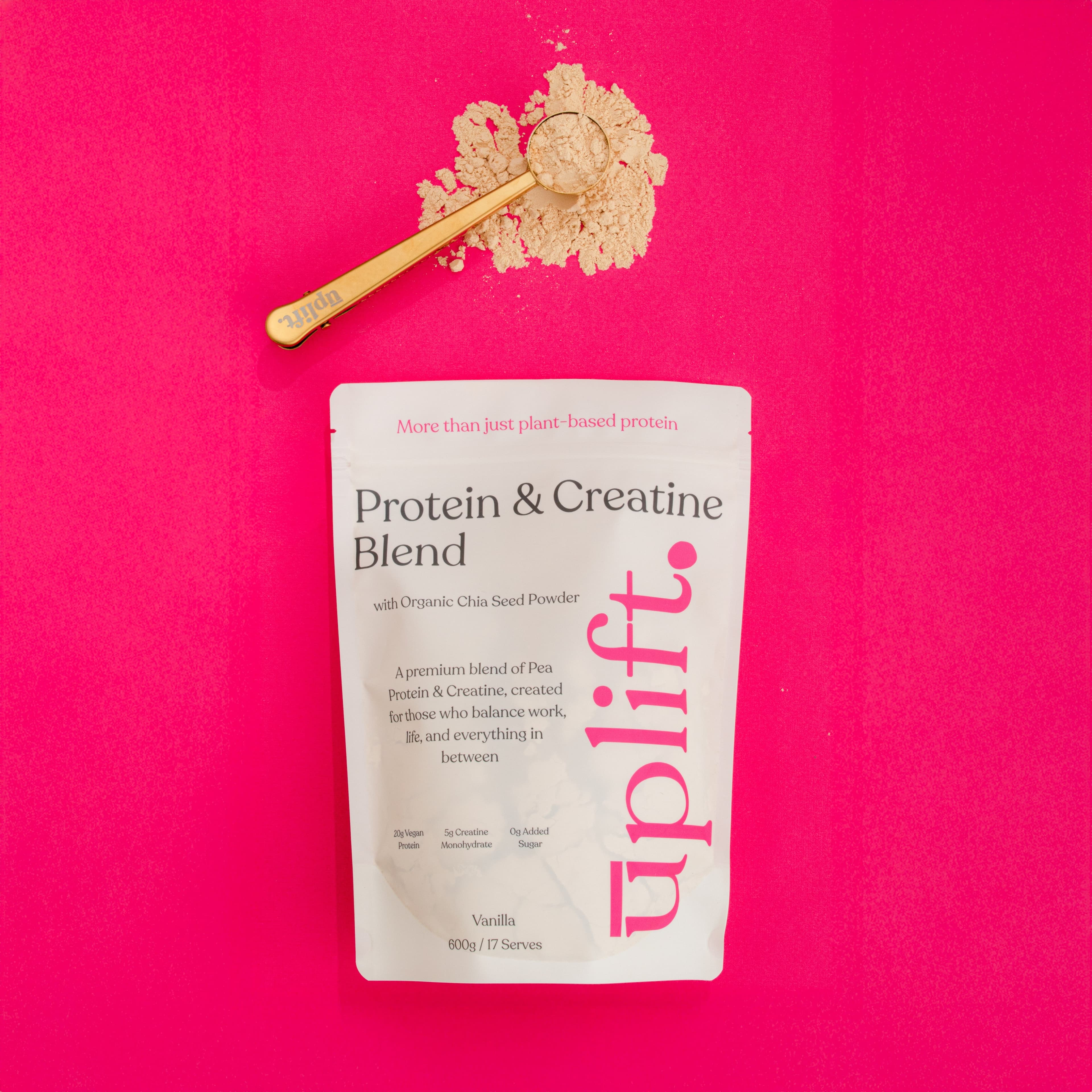
Mitchells Nutrition Bone Broth Protein Powder is made from grass-fed New Zealand bovine bones and comes unflavoured, so the ingredient list is essentially just the protein. It dissolves nicely in warm liquids and it's a lovely option if you want protein alongside the collagen and gelatine benefits of bone broth without simmering a pot for twelve hours. They publish a heavy metals profile on their site, and lead came back below the detection limit, which is what you want to see in a bone-derived product.
Chief Grass-Fed Whey and Collagen come from an Australian brand built on the idea that nothing in the tub should be ultra-processed, and both powders reflect that. Chief sent me their lab testing when I asked, and the results came back low across the board. They also test for pesticides, which is not common among brands.
The whey comes from 100% grass-fed Australian dairy, minimally processed, in smooth chocolate, creamy vanilla or unflavoured. The collagen is grass-fed Australian bovine, hydrolysed so it's odourless and dissolves into anything, in dark chocolate, creamy vanilla or unflavoured. Both use natural flavouring rather than the synthetic flavour-plus-sucralose combination that dominates the protein shelf. If it's your everyday shake, the vanilla or unflavoured are the ones I'd pick, for the cocoa reason above.
Holistically You Bone Broth Protein Powder (will return to stock soon) is another NZ-made option using grass-fed sources, made without fillers, artificial sweeteners or additives, and the brand is open about where it comes from. This one works beautifully in savoury cooking as well as the usual smoothie.
Holistically You Collagen Powder is worth a look if you're more interested in skin, joint and gut support alongside your protein. It's bovine collagen from grass-fed sources, unflavoured, and mixes easily into coffee, tea or a smoothie. Just remember collagen isn't a complete protein, so treat it as a complement to your other protein sources rather than a replacement.
.png&w=3840&q=75&dpl=dpl_GmiU14p87zrv8k1ZHC4df9Vg82K5)
Uplift Protein & Creatine Blend is NZ-made, built on pea protein isolate with micronised creatine monohydrate and organic chia seed powder, sweetened with monk fruit rather than sucralose. No artificial colours, flavours, fillers or preservatives. Getting creatine in the same scoop is a bonus, since most people supplementing protein would benefit from it anyway, and it saves buying a second tub.
They sent me their testing without my having to push for it, which I appreciated. Lead came back mid-range for a pea protein rather than at the low end, and everything sat within international intake guidance for a single serve. It's a newer brand so there's only one batch behind that so far, but the ingredient list is the best I found in a flavoured plant blend.
Nuzest Clean Lean Protein (Just Natural) is European golden pea isolate and very little else, which is why the unflavoured version is the one to consider. It came back with the lowest lead of any pea protein I looked at, about a quarter of what the others returned. Every batch is tested at an independent accredited lab, and nothing leaves the factory until those results come back clear. The flavoured versions have more going on in the tub and why I recommend the plain Just Natural option.
Nothing Naughty Lean Bean (Natural) is fava bean protein from Europe or Australia, and it's the cleanest plant-based result in terms of heavy metals I found, sitting alongside whey rather than the other plant options. There's a reason for that: fava beans hold heavy metals in their roots and shoots rather than in the seed you actually eat, which peas don't do. Nothing Naughty publishes results for their whole range with the lab certificates linked on their site. As with the Nuzest, the natural version is the one with the shortest ingredient list.
The Short Version
Protein powder is a useful tool alongside a whole food diet, not a replacement for one.
Heavy metals, artificial sweeteners, fillers and carrageenan are the main things worth watching for.
Plant-based powders can carry a higher heavy metal load than dairy-derived options, so testing and organic certification matter more with plant proteins.
There's no legal limit for heavy metals in protein powder here, which is exactly why testing and transparency are the things to look for.
New Zealand and Australian grass-fed whey, bone broth and collagen have a real sourcing advantage thanks to pasture-based farming.
Short ingredient list, no artificial sweeteners, shares testing results. That's the fastest filter there is.
References
Clean Label Project. (2018). Protein Powder White Paper. cleanlabelproject.org
Consumer Reports. (2025, October). Investigation into heavy metals in protein powders and ready-to-drink protein products.
Schiffman, S.S., Scholl, E.H., Furey, T.S., & Nagle, H.T. (2023). Toxicological and pharmacokinetic properties of sucralose-6-acetate and its parent sucralose: in vitro screening assays. Journal of Toxicology and Environmental Health, Part B. https://doi.org/10.1080/10937404.2023.2213903
Schiffman, S.S., & Rother, K.I. (2013). Sucralose, a synthetic organochlorine sweetener: overview of biological issues. Journal of Toxicology and Environmental Health, Part B. https://doi.org/10.1080/10937404.2013.842523
Tobacman, J.K. (2001). Review of harmful gastrointestinal effects of carrageenan in animal experiments. Environmental Health Perspectives, 109(10), 983–994. https://doi.org/10.1289/ehp.01109983
Joint FAO/WHO Expert Committee on Food Additives (JECFA). (2011). Evaluation of certain food additives and contaminants: seventy-third report. WHO Technical Report Series 960.
Food Standards Australia New Zealand. Generally expected levels (GELs) for metal contaminants. Australia New Zealand Food Standards Code, Standard 1.4.1.
Clean Label Project. (2025, January). Protein Powder Category Insights Report: 2025 Study. cleanlabelproject.org. https://cleanlabelproject.org/wp-content/uploads/securepdfs/CleanLabelProject_ProteinStudyWhitepaper_010625.pdf
Bhattacharyya, S., Shumard, T., Xie, H., Dodda, A., Varady, K.A., Feferman, L., Halline, A.G., Goldstein, J.L., Hanauer, S.B., & Tobacman, J.K. (2017). A randomized trial of the effects of the no-carrageenan diet on ulcerative colitis disease activity. Nutrition and Healthy Aging, 4(2), 181–192.
Borthakur, A., Bhattacharyya, S., Dudeja, P.K., & Tobacman, J.K. (2007). Carrageenan induces interleukin-8 production through distinct Bcl10 pathway in normal human colonic epithelial cells. American Journal of Physiology: Gastrointestinal and Liver Physiology, 292(3), G829–G838
EFSA Panel on Food Additives and Nutrient Sources added to Food (ANS). (2018). Re-evaluation of carrageenan (E 407) and processed Eucheuma seaweed (E 407a) as food additives. EFSA Journal, 16(4), 5238.
Frequently Asked Questions
What is protein powder good for?
Protein powder helps you meet daily protein targets that can be hard to hit through food alone. It supports muscle repair and recovery after training, helps preserve muscle mass as we age, keeps you fuller between meals, and offers a quick option when you're recovering from illness or simply short on time. It works best alongside a whole food diet, not instead of one.
What is the healthiest protein powder?
The healthiest protein powder has a short ingredient list, no artificial sweeteners, and has completed third-party heavy metal testing. Grass-fed whey, bone broth protein and collagen from pasture-raised animals tend to test lowest for heavy metals. If you want plant-based, choose a brand that tests and shows you the results.
What is the best protein powder from New Zealand and Australia?
New Zealand and Australian protein have a real sourcing advantage, because most of our cattle are pasture-raised by default. For bone broth protein, Mitchells Nutrition and Holistically You are both grass-fed and NZ-made. For whey protein powder, Chief is a great option as it's also grass-fed. For plant-based options, Uplift is NZ-made and heavy-metal tests their product, Nuzest tests every batch at an accredited lab and won't release stock until the results clear, and Nothing Naughty publishes results for their whole range, with their fava bean protein returning the cleanest plant numbers I found. With Nuzest and Nothing Naughty, stick to the unflavoured versions if you want the shortest ingredient list. For pure collagen, Holistically You in New Zealand, and for a collagen protein powder, Chief in Australia, both grass-fed with clean ingredient lists.
What brand of protein powder is best?
There's no single best brand, because the right one depends on whether you want whey, collagen, bone broth or plant protein. What the good ones have in common is a short ingredient list, natural sweeteners, transparent sourcing, and a willingness to share independent testing results. Judge a brand on those four things rather than on packaging or marketing claims.

People who viewed this also viewed
.png&w=828&q=75&dpl=dpl_GmiU14p87zrv8k1ZHC4df9Vg82K5)
Top Foods Worth Buying Organic: A Guide to Healthier Choices
Non-Toxic Cookware Guide: Which material is really healthiest for cooking?
.png&w=828&q=75&dpl=dpl_GmiU14p87zrv8k1ZHC4df9Vg82K5)
Which Chocolate Should You Actually Buy? A Brand-by-Brand Guide
How to Buy Organic Food on a Budget: Tips for Affordable Healthy Eating
Ultimate Guide to Non-Toxic Cutting Boards for a Healthy Kitchen