Non-Toxic Cookware Guide: Which material is really healthiest for cooking?
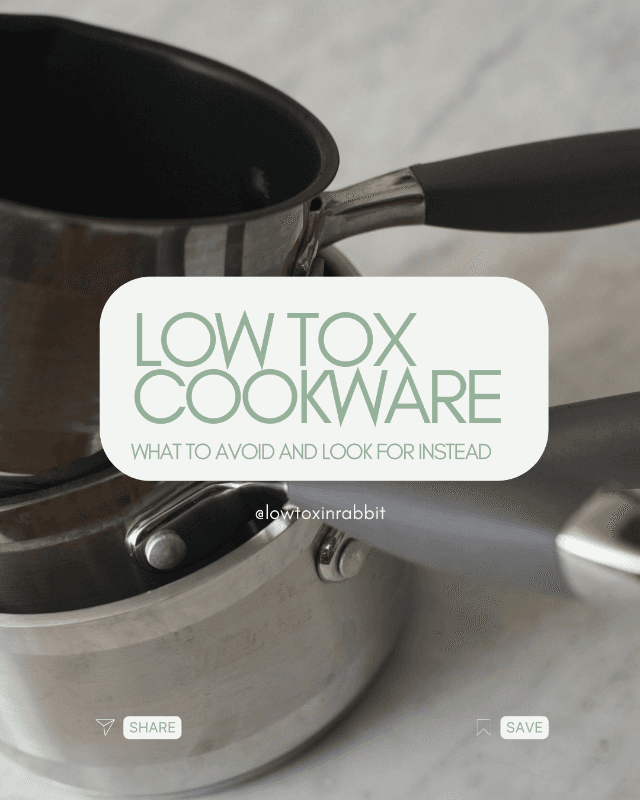
We’ve all heard the saying, “you are what you eat”, but have you ever stopped to consider that what you cook with matters just as much as the food itself? Most of us spend years building our “adult” cookware collection, often without realising that some pots and pans are unknowingly sabotaging our health. Let’s lift the lid on what’s really going into your meals, plus some trustworthy alternatives that will help you lower your family’s toxin load.
What Toxins are in Cookware?

Is Nonstick Cookware Safe?
A Teflon pan is used in most kitchens and has been around since the 1940s. However, Teflon's formulation was changed in 2013 due to the growing evidence of the long-term health risk of Perfluorooctanoic acid (PFOA). It was shown there was an increased risk of cancer, birth defects, developmental issues in infants, lowering fertility in women and toxic effects on the immune system, liver, and endocrine system. The World Health Organization classifies PFOA as “possibly carcinogenic to humans”. More than 180 countries have agreed to ban the production and use of PFOA.
Although PFOA has been removed in the making of Teflon (non-stick coatings) it is having a lasting effect on human health and the environment. PFOA is one of the chemicals from the group used in making non-stick coatings that are called 'forever chemicals' as they do not break down in the environment, can move through soils and contaminate drinking water sources. It has leached into water ways worldwide and research estimates that more than 200 million Americans are exposed to PFOAs and other non-stick coating chemicals in drinking water. That is not accounting for the rest of the world!
Teflon is now made with Polytetrafluoroethylene (PTFE). Although touted to be safer and now PFOA-free it can produce gases well known to kill birds. In humans the toxic effects can range from influenza-like symptoms (polymer fume fever) to severe conditions such as pulmonary oedema, pneumonitis and death. Teflon releases 6 toxic gases at temperatures easily reached by conventional stove tops, including carcinogens, global pollutants and a chemical that is lethal to humans even at low doses to know as Methyl fluoroacetate (MFA).
Another replacement chemical for PFOA is GenX, but this new alternative is also suspected to have similar toxicity. US Environmental Protection Agency notes animal studies have shown negative health effects in the kidneys, blood, immune system, developing foetuses, and especially in the liver following oral exposure. The data is also suggestive of cancer. Doesn’t sound much better than its original counterpart to me!
Recent research has also shown that a single scratch on nonstick cookware can release over 9000 plastic particles (PFAS Polymers), and a broken coating can release more than 2 million microplastics and nano plastics! These tiny particles build up over time in our bodies and emerging research is showing concerning health consequences including infertility, metabolic disorders, and an increased risk of certain cancers. It is important to also be aware that these new formulations have only existed for a few years and there is very limited research to inform the long-term health risks. If they can sell PFOA containing Teflon for over 70 years prior to it being banned due to safety concerns, there is nothing to say that we won't find out later down the track a whole lot more info on the toxicity of the new formulations. In fact, the company who first developed Teflon, DuPont, knew for at least 40 years it was harmful to people, but remained silent.
By the 1970s, DuPont’s own lab knew C-8 was ‘highly toxic when inhaled and moderately toxic when ingested.’ By 1979, studies showed a single PFOA dose killed dogs within two days. In 1980, DuPont and 3M learned that women working with PFAS were giving birth to babies with defects, yet they hid it, even claiming in an internal memo, ‘We know of no evidence of birth defects caused by C-8 at DuPont.’ These companies have been burying evidence of PFAS dangers since the 1960s.


Given what we know now, we recommend avoiding Teflon or any non-stick material to minimise your risk and the impact on the environment.
Is Aluminium Cookware Safe?
Aluminium is another cheap option when it comes to cookware and can have significant toxic effects on the body. Aluminium is a reactive metal and will release more into food particularly when cooking in acidic foods like tomatoes, chilli, chutneys, citrus or wine for example. Research in an April 2017 issue of Environmental Sciences Europe found that aluminium intakes were above acceptable levels when a fish dish marinated in lemon juice was cooked in aluminium. Similarly, when canned ravioli in acidic tomato sauce was cooked in aluminium, high levels of the metal leached into the food.
Why might this be a concern? Aluminium is a widely recognised neurotoxin that inhibits more than 200 biologically important functions and causes various adverse effects in plants, animals, and humans. There is also growing evidence that there is a link between aluminium and Alzheimer's disease.
We are exposed to aluminium from many other sources such as baking ingredients, processed foods, food additives, some pharmaceuticals, water and even tea leaves! So, it is best to steer clear of aluminium cookware to reduce your intake given how negatively it can impact your health.
Here are some ways to help work out if your cookware is aluminium or stainless steel (they are not full proof, but provide good indicators:
- A magnet sticking to the inside of the pot means it is not aluminium. However, if it doesn’t stick then you still can’t be sure it’s aluminium as not all stainless steels are magnetic.
- Aluminium is softer than stainless steel so is more likely to be easily scratched by rubbing a sharp object on it such as a key.
- When washed, aluminium tends to dull slightly, while stainless steel usually stays bright.
- Aluminium is typically a lighter brighter silver than stainless steel.
- If you are savvy with science and numbers, there is a more scientific way to determine between stainless steel and aluminium based on the density here.
Is Copper Cookware Safe?
Although copper is an essential trace element that is vital to the health of all living things it is best to avoid copper cookware. You might ask why given it is an essential mineral? Like all essential elements and nutrients, too much or too little nutritional ingestion of copper can result in an array of health conditions. Too much copper intake has now been linked to conditions such as Alzheimer’s and Schizophrenia. Like aluminium, copper is highly reactive. When acidic foods are cooked in unlined copper cookware or in lined cookware where the lining has worn through, toxic amounts of copper can leach into the foods being cooked. There are numerous sources of copper we are exposed to that can help contribute to an accumulation of copper in our bodies such as copper pipes, dental fillings, copper-contaminated foods and copper fungicides to name a few. It is best to avoid copper cookware as we are far more likely to be ingesting too much copper rather than too little.
Is Ceramic-Coated Cookware Safe?
Ceramic coated cookware is a more border line option and depending on what you read it is considered safe by some and toxic by others. I have chosen to put it in the toxic category as there are some red flags. However, there is limited information about its toxicity due to it being such a new product comparative to other cookware like Teflon, Copper or Aluminium.
What is ceramic coated cookware? It is essentially any metal pan that has a thin ceramic layer on top. The pan base is typically made from aluminium. This alternative non-stick cookware may claim to be a safer option than Teflon as they are free from PTFE (not all are) and PFOAs, but it may only safe to use while the coating is intact. If the thin layer on the pan chips you could expose yourself to other toxic materials such as aluminium or copper and it may leach heavy metals (e.g. lead, cadmium) into your food. I know I have been guilty in the past of using a pan well past the point of its used by. Not only this, but the ceramic coating easily wears down with use and tiny particles can break off and release into the food. Little is known about how these tiny particles impact your body when ingested. Many companies also use different materials when making the ceramic coating making it even more ambiguous.
Not only are possibly small particles released into your food every time you cook, the coating also has been shown in some cases to release silicone oil onto the pan’s surface and then into your food. The silicone oil is what gives the non-stick quality. However, over time it wears off and is no longer non-stick, another reason why ceramic cookware has to be replaced regularly, which is not great for the environment either. You also find this oil in fabric softeners and hair conditioner. It is still too new to determine how safe this coating is and how consuming it may impact your body. For this reason, I would be hesitant to use this cookware.
What are Non-Toxic Cookware Materials?
If you have gotten to this point you are probably thinking you need to throw out all your cookware! But do not despair there are safer options that are tried and true and have stood the test of time and they are much safer for our health and the environment.
Is Cast Iron Cookware safe?
Cast iron is well known for its longevity and durability. It can even be made non-stick if you season it correctly. It is a great way to get more iron into your diet and we also find it makes our food taste that much better. People who most benefit from cooking in cast iron are menstruating and pregnant women, vegetarians and growing children as they need higher levels of iron in their diets. The effect is so reliable that iron cookware has occasionally been used to combat anaemia.
When buying Cast Iron is best to avoid enamel coatings and just go for options pre-seasoned with traditional cooking oils.
Cast Iron from Lodge and Iron Clad make for great non-toxic cast iron options.
Is Stainless Steel Cookware Non-Toxic?
This is a great more lightweight option that can withstand the wear and tear from everyday cooking. One of the major advantages of stainless steel is that it’s resistant to rust or corrosion. Stainless steel is considered by the US Food and Drug Administration (FDA) as safe for food contact as long as it has at least 16% chromium. Though it isn’t quite as inert as some people claim, it is still more stable and safer than other more reactive cookware like copper and aluminium. Just make sure you go for stainless steel grades like 18/8, 18/10 or 18/0 which have lower nickel content (the first number is the % chromium content and the second is % nickel content). Ideally, you’ll also want to get at least 300 series and above in stainless steel. Stay away from cookware labelled 200 series as they have been shown to leach high levels of heavy metals into your food.
You can find great Stainless-Steel options and also Nickel-free options from Solidteknics (use SOLIDRABBIT for 5% off*) and The Low Tox Project*. As well as the Scanpan stainless steel range and Baccarat Stainless Steel options.
Is Glass Cookware Safe?
Glass is made of sand, soda ash and limestone which is melted and cast. It has been used for millennia and does not leach any toxins into your food. It is a tried and true material that is super eco-friendly. The only downside is that it's not non-stick. But nothing that can't be fixed with a soak and a bit of elbow grease.
Some key advantages of glass cookware are that it responds well for most oven-based cooking, it does not react with acidic foods, safely stores all foods in it, and most importantly it is healthy as there are no adverse side effects from cooking in it. It is also safe for the environment.
Glass Cookware is a little tricker to find, but Briscoes often have great glass casserole dishes on sale.
Is Carbon Steel Safe for Cooking?
Carbon steel pans are made from a combination of iron and carbon; carbon steel is also a non-toxic and safe material that does not contain any harmful chemicals or coating. It is more lightweight than cast iron and will also develop a natural non-stick surface with use. For comparison, cast iron pan contains around 96% iron and 4% carbon, the ratio for carbon steel is 97% – 99% iron and 3% – 1% carbon. Carbon Steel is perfect for Searing, frying, and wok cooking.
You will find great Carbon Steel Options in the Lodge carbon steel range.
Is Wrought Iron Cookware safe?
Wrought iron is one of the oldest and most traditional forms of cookware, prized for its durability and even heat distribution. Unlike cast iron, which is poured into moulds, wrought iron is hammered and shaped by hand, giving it a unique, rustic quality.
Wrought iron is non-toxic and safe for cooking, as it contains no harmful coatings or chemicals. Like cast iron, it can be seasoned to create a natural non-stick surface. However, it is slightly more porous than cast iron, so proper seasoning and maintenance are key to preventing rust and ensuring longevity.
One advantage of wrought iron is its lighter weight compared to cast iron, making it easier to handle while still retaining excellent heat retention. It’s ideal for open-fire cooking, grilling, and searing.
Since true wrought iron cookware is rare today, most modern “wrought iron” pieces are actually mild steel or a hybrid of materials. However, you can find authentic wrought iron, brands like Solidteknics (use SOLIDRABBIT for 5% off*).
Top Non-Toxic Cookware Brands I recommend

- Cast Iron: Lodge
- Wrought Iron: Solidteknics (use SOLIDRABBIT for 5% off*)
- Stainless Steel Cookware & Bakeware: Low Tox Project*
- Nickel-free Stainless: Solidteknics (use SOLIDRABBIT for 5% off*) and Low Tox Project*
- Carbon Steel: Lodge
- Scan Pan pots and pans available at Briscoes
- Baccarat Stainless Steel options available at Farmers
The Best Decision was Switching to Non-Toxic Cookware
We have not looked back giving up on the convenience of non-stick cookware. We have fallen in love with the added flavour benefits from using cookware that is better for you and more environmentally friendly. Choosing safer alternative cookware is an easy way to help reduce the toxin load of you and your family.
*Links are affiliated.
References:
https://pmc.ncbi.nlm.nih.gov/articles/PMC7906952/
https://www.epa.gov/pfas/our-current-understanding-human-health-and-environmental-risks-pfas
https://nap.nationalacademies.org/read/26156/chapter/5#66
https://pmc.ncbi.nlm.nih.gov/articles/PMC10237242/
https://www.sciencedirect.com/science/article/abs/pii/S004896972205392X

People who viewed this also viewed
The Truth About GMO-Derived Rennet and Why It's Important to Choose GMO-Free Cheese
The Best Non-Toxic Baby and Kids Dinnerware in NZ and AU
Ultimate Guide to Non-Toxic Cutting Boards for a Healthy Kitchen
.png&w=828&q=75&dpl=dpl_GmiU14p87zrv8k1ZHC4df9Vg82K5)
Non-Toxic Kettles: How to Choose a Safe Kettle and the Best Options Available
The Ultimate Water Filter Guide