Non-Toxic Toys Guide: How to Choose Safe Toys for Kids
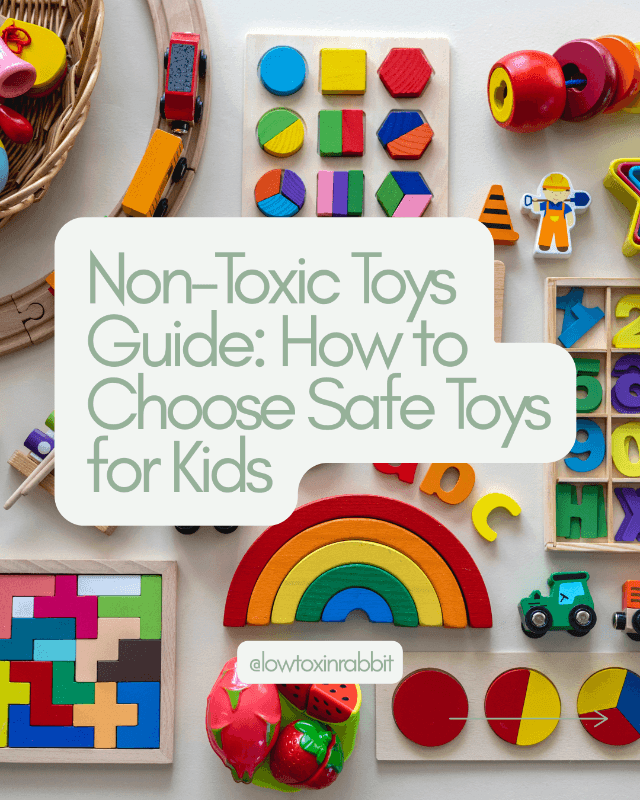
As parents, we carefully read food labels and think about what goes into our children's bodies. But what about the toys they're putting in their mouths, holding for hours, and sleeping next to every night? The reality is that many toys contain toxic chemicals and the toy industry has surprisingly little regulation when it comes to what's actually in these products.
Finding safe toys for kids can be overwhelming, but it is one of the most important steps we can take for their health. Here's what you need to know to find safer, non-toxic toys and low-tox options for your family.
The Toxic Chemicals Lurking in Toys: Why Non-Toxic Toys Matter
Here are some common toxins found in conventional toys and how we can minimise our children’s exposure to them by choosing safer toy alternatives.

1. Phthalates
These chemicals are used to make plastic soft and flexible (think: bath toys, dolls, teething toys). Phthalates are hormone disruptors that have been linked to developmental issues, reproductive problems, and asthma. The scary part? They're not chemically bound to the plastic, which means they leach out over time especially when kids chew on them. Always look for phthalate-free toys.
2. Lead and Heavy Metals
Lead has been found in painted toys, costume jewellery, and even some plastics. There is no safe level of lead exposure for children. Even small amounts can cause developmental delays, learning difficulties, and behavioural problems. Other heavy metals like cadmium, arsenic, and mercury have also been detected in children's toys.
3. BPA (Bisphenol A)
Found in hard plastics and can leach into a child's system, especially when heated or worn down. BPA is an endocrine disruptor linked to developmental issues, obesity, and behavioural problems. Choosing BPA-free toys is essential for safety.
4. Flame Retardants
Often added to foam toys, stuffed animals, and play mats. Many flame retardants are toxic and have been linked to thyroid disruption, developmental delays, and cancer. They accumulate in dust and are easily absorbed through skin or inhaled.
5. PVC (Polyvinyl Chloride)
This plastic (often marked with recycling code #3) releases toxic chemicals during production, use, and disposal. PVC toys often contain phthalates and can release dioxins known carcinogens.
6. Formaldehyde
Found in pressed wood toys and some fabrics. This known carcinogen can cause respiratory issues and skin irritation.
Red Flags: What to Avoid
When shopping for safe toys for babies and kids, steer clear of:
Strong chemical smells - That "new toy" smell is often toxic chemicals off-gassing
Soft, squishy plastics - Likely contain phthalates
Brightly painted toys from unknown brands - Risk of lead paint
PVC/vinyl toys - Look for recycling code #3
"Mystery" toys from discount shops - Often untested and unregulated
Foam play mats and toys – May contain flame retardants
Cheap costume jewellery - High risk of lead and cadmium.

What to Look for Instead: Safe Toys for Kids
1. The safest, non-toxic toys are made from natural, untreated materials:
Solid wood (not pressed wood or MDF) - Look for wooden toys with natural finishes.
Natural rubber (for teething toys and bath toys) - A great plastic-free alternative.
Natural fibres like cotton (ideally organic cotton) or wool (for stuffed animals and dolls).
Stainless steel (for play kitchen items for instance).
Silicone (food-grade, BPA-free).
2. Safe Finishes
If you're buying wooden toys, make sure they're finished with:
Food-grade oils (like coconut or linseed oil)
Beeswax
Non-toxic, water-based paints
Natural dyes
Look for unfinished toys or ones that clearly state non-toxic finishes. Check if the company is transparent about materials. Finding the perfect toy isn't easy, but knowing what it's made from helps you make better choices.
3. Third-Party Certifications
While certifications aren't perfect, they're a good starting point for identifying eco-friendly and low-tox toys. Here's what you need to know about the most important ones:

GOTS (Global Organic Textile Standard)
What it covers: Fabric toys, stuffed animals, dolls, cotton play items
GOTS is the gold standard for organic toys. When you see this certification on a toy, it means:
The fabric contains at least 95% certified organic fibres
Toxic dyes and finishes are prohibited
No formaldehyde, heavy metals, or aromatic solvents
Strict wastewater treatment requirements
Social criteria for workers throughout the supply chain
Why it matters: Many fabric toys are treated with formaldehyde-based finishes, toxic dyes, and pesticide residues. GOTS ensures the entire production process from harvesting the cotton to the finished toy is free from harmful chemicals. This is especially important for stuffed animals and dolls that kids cuddle and sleep with.
Look for: The GOTS label should specify either "organic" (95%+ organic fibres) or "made with organic" (70%+ organic fibres). Go for the higher standard when possible.
FSC (Forest Stewardship Council)
What it covers: Wooden toys, blocks, puzzles, play structures
FSC certification means the wood comes from responsibly managed forests and is a top choice for sustainable toys. But here's what most people don't know: FSC also has requirements around chemical use.
FSC-certified products:
Come from forests managed without highly hazardous pesticides
Prohibit the use of certain toxic chemicals in processing
Ensure sustainable harvesting practices
Provide traceability from forest to finished product
Why it matters: Not all wood is created equal. Some wooden toys are made from wood treated with pesticides, or finished with toxic varnishes and paints. FSC certification gives you confidence about where the wood comes from and reduces (though doesn't eliminate) chemical exposure concerns.
Important note: FSC doesn't specifically regulate toy finishes, so you'll still want to check that paints and stains are non-toxic. Look for FSC combined with statements about non-toxic finishes.
EN71 (European Toy Safety Standard)
What it covers: All toys sold in the European Union
EN71 is often considered stricter than US toy safety standards. This comprehensive standard includes:
Strict limits on heavy metals (lead, cadmium, mercury, chromium, etc.)
Restrictions on certain phthalates
Flammability requirements
Mechanical and physical safety testing
Chemical safety requirements including migration testing
Why it matters: The EU tends to take a more precautionary approach to chemicals than the US. EN71 has lower allowable limits for many toxic substances and bans chemicals that are still permitted in US toys. Some European countries have even stricter national requirements on top of EN71.
Look for: Products marked "EN71 certified" or "meets EN71 standards." This is especially valuable when buying toys from European brands or imports.
Real-world impact: EN71 has stricter lead limits than US standards and more comprehensive testing for chemical migration from toys that children might put in their mouths.
CPSIA (Consumer Product Safety Improvement Act)
What it covers: All children's products sold in the United States
CPSIA compliance is legally required for all toys sold in the US, but not all companies follow the rules. Here's what CPSIA requires:
Lead content limits (100 ppm in accessible parts)
Lead paint limits (90 ppm)
Phthalate restrictions (certain phthalates banned in children's toys)
Third-party testing and certification
Tracking labels for accountability
Why it matters: CPSIA was passed in 2008 after massive toy recalls due to lead contamination. While compliance is mandatory, enforcement isn't perfect, especially for imported toys from unknown sellers.
The catch: CPSIA sets minimum safety standards, but "CPSIA compliant" doesn't mean toxin-free. It just means the toy meets basic legal requirements. Many toxic chemicals aren't regulated under CPSIA at all.
Look for: CPSIA certification is a baseline requirement, not a badge of honour. Use it to rule out non-compliant products. It is best to combine CPSIA compliance with other certifications and material transparency.
Oeko-Tex Standard 100
What it covers: Textiles and fabric toys
Oeko-Tex Standard 100 is one of the most comprehensive textile certifications for harmful substances. Products certified under this standard have been tested for:
Over 100 harmful substances including known and regulated substances
Many substances not yet regulated but potentially harmful
Formaldehyde
Heavy metals
Pesticides
Phthalates and other plasticizers
Organotin compounds
Flame retardants
Colorants that release carcinogenic compounds
Why it matters: Oeko-Tex goes beyond legal requirements and tests for substances that might not yet be regulated but are suspected of being harmful. The testing is done by independent institutes, and products are tested at every stage of production.
The product classes: Oeko-Tex has different standards based on skin contact:
Product Class I (most stringent): For babies and young children up to 3 years. This is what you want for toys. It has the strictest limits.
Product Class II: Skin contact products
Product Class III: No skin contact products
Product Class IV: Decoration materials
Look for: "Oeko-Tex Standard 100 Product Class I" specifically. This ensures the textile meets the strictest criteria for babies and toddlers.
Real difference: Oeko-Tex Standard 100 tests the finished product, not just the raw materials. This matters because harmful substances can be introduced during dyeing, printing, and finishing processes.
Other Certifications Worth Knowing:
GREENGUARD Gold: Tests for chemical emissions and volatile organic compounds (VOCs). Great for furniture, play mats, and larger toys that might off-gas in your home.
Cradle to Cradle Certified: Evaluates product safety, recyclability, and environmental impact. A holistic certification that's still relatively rare in toys but worth seeking out.
ASTM F963: The American Society for Testing and Materials standard for toy safety. Similar to CPSIA but goes into more technical detail. It's the standard that CPSIA references.
The Reality Check:
Certifications are helpful tools, but they're not perfect and not all toys will have them. Here's what to remember:
Certifications cost money, so small ethical brands selling non-toxic toys might not be able to afford them even if their products are safe
Some certifications are more rigorous than others
Having multiple certifications is better than having just one
Certifications should be combined with material transparency from the manufacturer
No certification tests for everything. Unfortunately, gaps always exist
Bottom line: Use certifications as a screening tool, but also look at the actual materials used, ask questions, and trust brands that are transparent about their entire production process.
Brands That Care
Support companies that prioritise safety and transparency. Look for brands that:
Clearly list materials used
Avoid toxic chemicals by choice, not just regulation
Test their products independently
Are transparent about their manufacturing process
My Non-Toxic Toy Recommendations by Category
Teething Toys:
Natural rubber teethers (ensure they're one solid piece, not glued)
Organic cotton or natural fibre teething rings
Food-grade silicone teethers
Untreated wooden teething rings
Bath Toys:
Natural rubber toys (avoid plastic squeezies that harbour mould)
Stainless steel cups and containers
Silicone bath toys
Stuffed Animals & Dolls:
Organic cotton stuffed animals
Wool-filled dolls
Natural fibre dolls with non-toxic dyes
Building & Learning Toys:
Solid wooden blocks (unfinished or beeswax-finished)
Stainless steel or wooden stacking toys
Natural wooden puzzles
Art Supplies:
Beeswax crayons
Natural watercolours
Non-toxic, plant-based finger paints
Natural playdough (or make your own!)
Play Kitchen & Food:
Wooden play food
Stainless steel play dishes
Natural fibre play food (knitted or sewn)
If you think of any brands or products I should add please let me know.
Some better non-toxic toy brands include Tender Leaf Toys, Lion + Lamb, Fabelab, Plan Toys, Sarah's Silks, Kikadu Organic, Patti Oslo, Tara Treasures, Juni Moon and Apple Park.
Practical Tips for Safer Toy Shopping
1. Buy less, choose better
Instead of a mountain of cheap plastic toys, invest in fewer high-quality, non-toxic toys made from safe materials.
2. Check recycling codes on plastics
Avoid plastics marked with recycling codes #3 (PVC), #6 (polystyrene), and #7 (often contains BPA). Safer plastics include #1, #2, #4, and #5.
3. Smell test
If a toy has a strong chemical smell, don't buy it. That smell indicates chemicals off-gassing.
4. Read labels carefully
Look for specific claims like "BPA-free," "phthalate-free," "PVC-free," and "lead-free." Be wary of vague claims like "non-toxic" without specifics.
5. Buy secondhand wisely
Older toys (especially pre-2008) may contain lead paint or other banned substances. Stick to natural materials like solid wood or check newer secondhand options.
6. Ask questions
Don't be afraid to contact manufacturers and ask what their toys are made from. If they can't or won't tell you, that's a red flag.
7. Clean toys regularly
Dust can contain toxic chemicals that have leached from toys. Regular cleaning reduces exposure.
8. Let new toys air out
If you do buy plastic toys, let them air out for several days before giving them to your child.
Key Takeaways: How to Choose Safe, Non-Toxic Toys
Our children deserve to play without being exposed to toxic chemicals. While it's impossible to eliminate every risk, choosing safe toys for kids made from natural materials, avoiding obvious red flags, and supporting transparent companies makes a massive difference.
You don't have to overhaul your entire toy collection overnight. Start with the toys your child uses most, especially teething toys, bath toys, and anything they put in their mouth. Replace items as needed with safer, low-tox options.
Remember: the toy industry won't prioritise our children's health unless we demand it. Every non-toxic toy you choose is a vote for change.
Want to see specific toys tested for toxic chemicals? Head to our new Testing Platform and suggest products you'd like us to investigate. Together, we can hold companies accountable and get the answers we deserve. If you also want to be part of the movement towards safer toys, please join Lead Aware’s new Facebook group here.
References
Centers for Disease Control and Prevention (CDC). "Lead in Toys." Available at: https://www.cdc.gov/lead/prevention/sources/toys.html
U.S. Consumer Product Safety Commission. "Phthalates." Available at: https://www.cpsc.gov/Business--Manufacturing/Business-Education/Business-Guidance/Phthalates-Information
Environmental Working Group. "EWG's Guide to Healthy Cleaning - Flame Retardants." Available at: https://www.ewg.org/guides/cleaners/content/flame_retardants
National Institute of Environmental Health Sciences. "Bisphenol A (BPA)." Available at: https://www.niehs.nih.gov/health/topics/agents/sya-bpa
Ecology Center. "HealthyStuff.org: Toy Testing Results." Available at: https://www.healthystuff.org
American Academy of Pediatrics. "Food Additives and Child Health." Pediatrics. 2018;142(2):e20181410
World Health Organization. "Lead poisoning and health." Available at: https://www.who.int/news-room/fact-sheets/detail/lead-poisoning-and-health
U.S. Environmental Protection Agency. "Phthalates Action Plan." Available at: https://www.epa.gov/assessing-and-managing-chemicals-under-tsca/phthalates-action-plan
European Chemicals Agency (ECHA). "Substance Infocard: Formaldehyde." Available at: https://echa.europa.eu
Healthy Babies Bright Futures. "What's in My Baby's Food?" 2019. Available at: https://www.healthybabyfood.org
Global Organic Textile Standard (GOTS). "GOTS Standard." Available at: https://www.global-standard.org
Forest Stewardship Council (FSC). "FSC Standards." Available at: https://fsc.org/en/standards
European Commission. "Toy Safety Directive." Available at: https://ec.europa.eu/growth/sectors/toys/safety_en
U.S. Consumer Product Safety Commission. "Consumer Product Safety Improvement Act (CPSIA)." Available at: https://www.cpsc.gov/Regulations-Laws--Standards/Statutes/The-Consumer-Product-Safety-Improvement-Act
Oeko-Tex. "Standard 100 by Oeko-Tex." Available at: https://www.oeko-tex.com/en/our-standards/standard-100-by-oeko-tex
Children’s Toys https://www.comcom.govt.nz/business/your-obligations-as-a-business/product-safety-standards/childrens-toys/?utm_source=chatgpt.com

.png&w=828&q=75&dpl=dpl_GmiU14p87zrv8k1ZHC4df9Vg82K5)